EdTech Trends Shaping Education in the Middle East 2026
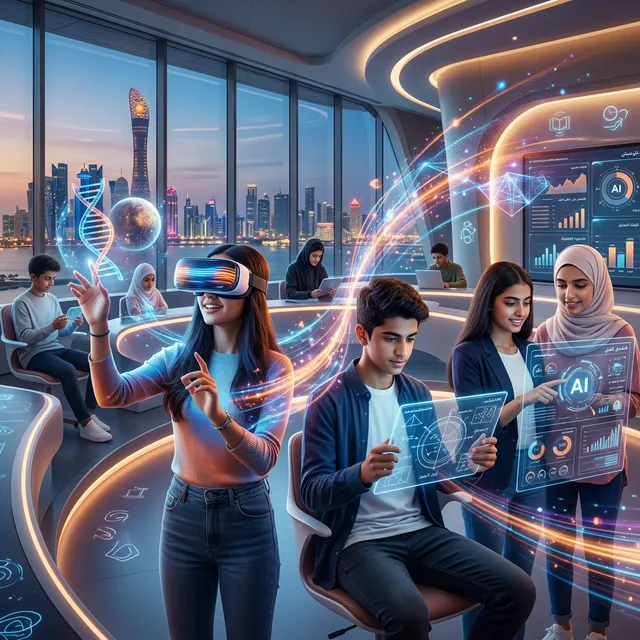
The Middle East is no longer just a consumer of global technology; it has become a vibrant laboratory for educational innovation. Driven by national visions and a youthful, digital-native population, the region is leapfrogging traditional educational models. As we head into 2026, several key EdTech trends are fundamentally reshaping the classroom experience.
1. Hyper-Personalized AI Tutors
Artificial Intelligence has moved beyond automation to true personalization. AI-driven platforms now analyze a student's learning pace, strengths, and weaknesses in real-time, providing tailored content and feedback. In Qatar and the UAE, schools are increasingly adopting these "digital teaching assistants" to support teachers and ensure no student is left behind.
2. Immersive Learning with VR and AR
Virtual Reality (VR) and Augmented Reality (AR) are bringing history and science to life. Imagine students in Doha "walking" through ancient civilizations or exploring the molecular structure of a virus in 3D. These immersive experiences are significantly increasing engagement and retention rates across the GCC.
3. Gamified Education Pathways
Gamification is transforming learning from a chore into a challenge. By integrating game mechanics into curricula, educators are fostering a competitive and rewarding environment. This trend is particularly popular in STEM subjects, where complex concepts are taught through interactive quests and simulations.
4. Blockchain for Academic Integrity
As education becomes more global and digital, the need for secure verification is paramount. Blockchain technology is being utilized in the Middle East to create immutable digital records of academic achievements, making it easier for students to share their credentials with universities and employers worldwide.
What This Means for Educators and Parents
- Continuous Professional Development: Teachers must be equipped with the skills to manage these new technologies.
- Digital Literacy & Safety: As learning moves online, educating students on cyber-safety and critical thinking is more important than ever.
- Collaborative Learning: Technology should enhance, not replace, human interaction and collaborative problem-solving.
Experience the Future at QELE 2026
At the Qatar Education Leadership Expo 2026, our EdTech Innovation Zone will showcase the pioneers behind these technologies. Meet the experts, witness live demonstrations, and learn how to integrate these tools into your institution.
Stay ahead of the curve. Register now to witness the future of learning firsthand!
← Back to Blog